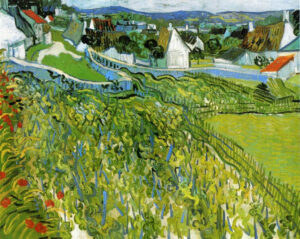
There is a vineyard. Someone has planted it, put a fence around it, dug a winepress, built a watchtower, and entrusted it to tenants. And everything in Jesus’ parable turns on one simple fact: The vineyard does not belong to the tenants. They have been entrusted with it. They are responsible for it. They are called to tend it and bring forth its fruit. But it is not theirs. And the tragedy of the parable begins when they start to behave as though it is.
When the landowner sends servants to receive the fruit of the vineyard, the tenants beat one, kill another, and stone another. More servants come. The violence continues. Finally, the landowner sends his son. And the tenants say to one another, “This is the heir; come, let us kill him and get his inheritance.”
It is a strange and disturbing story. And maybe part of what makes it so disturbing is that the tenants seem to believe that if they can get rid of everyone who reminds them that the vineyard is not theirs, then somehow it will become theirs. If they eliminate the heir, perhaps they can become the owners.
That is where this parable begins to speak with startling force to us on this St. Francis Day, at the close of the Season of Creation, because humanity has also been entrusted with a vineyard: this earth. A world we did not create. We did not call the oceans into being. We did not invent forests or coral reefs or migrating birds. We did not design the intricate relationships among soil, water, plants, animals, atmosphere, and climate that make life possible. We received all of this.
And yet human beings have an extraordinary capacity to confuse possession with ownership. We begin to think that because something is in our hands, it belongs entirely to us. And so, forests become timber. Mountains become minerals. Rivers become water supply. Animals become commodities. Land becomes real estate. And even other human beings can become labor, markets, obstacles, or costs.
The problem in Jesus’ parable is not simply that the tenants are greedy. It is that they forget who they are. They forget that they are tenants. They begin to imagine that the vineyard exists for them alone. And I wonder whether this is one of the deepest spiritual roots of our ecological crisis. We have forgotten that we are tenants. We have forgotten that creation is something entrusted to us, not something we own absolutely.
And when we forget that our questions begin to change. Instead of asking, “How do we care for this?” we ask, “How much can we take?” Instead of asking, “What does this place need in order to flourish?” we ask, “What can we get from it?” Instead of asking, “What kind of world are we leaving?” we ask, “What can we use now?” The vineyard becomes ours. Or at least we begin to act as though it does.
Jesus tells this parable in a context of conflict over authority. The chief priests and elders have challenged him. Who gave you the right to do these things? Who gave you the right to disrupt the Temple? Who gave you the right to teach as you do? And Jesus responds with a story about people who have been entrusted with responsibility and have slowly confused responsibility with ownership.
That is a dangerous confusion. It is dangerous in religion. It is dangerous in politics. It is dangerous in economics. And it is dangerous in our relationship with the earth. Because once we begin to believe that something belongs entirely to us, we can justify almost anything in order to keep it. That is what happens in the parable.
The tenants become violent not because the vineyard has failed. There is fruit. The problem is that they do not want to give it up. They want to keep the fruit. They want the vineyard. They want the inheritance. And that makes this an economic parable as much as an ecological one. Because the question is not only whether the vineyard produces. The question is also: who receives the fruit? Who has access to its abundance? Who benefits from the way the vineyard is managed? Who bears the cost? Those questions sound very contemporary.
Does the earth produce enough food for everyone? Of course it does. But who has access to it? Who profits from it? Who goes hungry? Who has clean water? Whose water is contaminated? Who lives near the pollution? Whose community is more likely to flood? Who can afford to move? Who cannot? Who receives the benefits of our economy? And who bears the environmental costs of those benefits? These are not separate questions. Ecology and economics are deeply connected because both are ultimately about the household we share. They are about how we live together within the vineyard. And Jesus says that what matters is fruit.
In Matthew’s Gospel, fruit is never merely productivity. Fruit is what a life aligned with God produces. Justice. Mercy. Faithfulness. Healing. Right relationship. A vineyard can be enormously productive and still fail to bear the fruit God desires. A society can be wealthy and still fail to bear the fruit God desires. A church can be busy and successful and still fail to bear the fruit God desires.
The question is not simply, “How much do we produce?” The question is, “What kind of fruit do we produce?” Does our life together create flourishing? Does it create justice, healing and hope? Does it create enough for everyone? Or does it create scarcity for some so that others can have more than they need?
On St. Francis Day, those questions take on another dimension. Francis looked at creation and saw relationship. He did not look at the natural world as background scenery for human life. He did not see animals, water, wind, and earth merely as things for human use. He saw kinship. He understood that human beings live within creation, not above it. And that is a profoundly different way of seeing.
If the world is simply a collection of resources, then the central question is how efficiently we can use it. But if the world is a community of life, then the central question becomes how faithfully we can live within it. How do we belong here? How do we care for what has been entrusted to us? How do we make room for other creatures to flourish? How do we recognize limits? How do we share? How do we receive with gratitude rather than seize with entitlement? Those are spiritual questions.
And perhaps that is one reason the ecological crisis can feel so difficult. It is not simply a technological problem. It is not simply a political problem. It is not simply a problem of finding better energy sources or more efficient systems. It is also a spiritual problem. It asks us who we believe we are. Owners or tenants?
And then there is another disturbing part of Jesus’ parable. The tenants do not merely misuse what has been entrusted to them. They attack the messengers who call them to account. That part of the story should make us uncomfortable too. Because every generation has its messengers. Scientists who tell us what is happening to the climate. People living in communities already experiencing the consequences. Young people asking what kind of world they are inheriting. Indigenous communities reminding us that land cannot be reduced simply to property. Farmers and fishers noticing changes that statistics sometimes describe only later. People asking whether endless economic growth is possible on a finite planet.
How do we respond to those voices? We may not beat or stone the messengers. But there are other ways to silence them. We can ridicule them. We can dismiss them. We can insist that the problem is exaggerated. We can postpone action. We can say the timing is inconvenient. We can decide that the cost of change is too high. Or we can simply keep living as though we had never heard them.
And this is where the violence of Jesus’ parable becomes important. We do not have to understand that violence as something God endorses. The violence can instead become a mirror. It can show us what happens when possession replaces stewardship. What happens when protecting what we think is ours becomes more important than listening, changing, or returning what was never ours in the first place.
The tenants become violent because they cannot imagine relinquishing control. And that may be the hardest part of repentance for any of us. Letting go of control. Letting go of entitlement. Letting go of the assumption that our comfort, our consumption, our convenience, or our prosperity must always come first.
But repentance does not simply mean feeling guilty. It means turning. Changing direction. Learning how to live differently. And that may be the invitation of this parable to us. Not to condemn someone else. Not to imagine that we are the righteous tenants who have finally gotten everything right.
Christian readers have too often used this parable that way, imagining that the vineyard was taken from one group and handed safely to us. But that reading lets us escape the story. Jesus’ words are much more unsettling if we allow ourselves to stand among the tenants. We too have been entrusted with something we did not create. We too are capable of confusing stewardship with ownership. We too can resist voices that call us to account. We too can hoard the fruit.
So the question is not, “Who were the bad tenants?” The question is, “What kind of tenants are we called by God to be?” And perhaps St. Francis can help us answer. We are called to be tenants who live with gratitude and who know that enough can be enough. Tenants who understand that other creatures are not disposable and that wealth carries responsibility. Tenants who ask who is bearing the cost of their choices and who listen when messengers come. Tenants who measure success not only by what is produced, but by whether the whole vineyard flourishes.
Jesus says that the kingdom will be given to people who produce its fruits. So perhaps that is the question we should carry with us from this Gospel. What fruit are we producing? Does our life produce justice? Does it produce clean water and food that is shared? Does it produce communities in which people can live with dignity? Does it produce healthy soil, living forests, and flourishing seas? Does it produce mercy, generosity, reconciliation and hope?
The vineyard is still God’s. That is a word of judgment, because it means we are accountable for how we tend it. But it is also a word of grace. Because the vineyard was never ours to possess. It was ours to love. Ours to tend. Ours to share. Ours to receive with gratitude. And ours, one day, to hand on.
May we be faithful tenants. May the fruit we bear be worthy of the One who entrusted the vineyard to us. And may all creation flourish within it. Amen.