On Monday I was at my child’s soccer game. It was a close game. Tied for much of the time. In the end, my child’s team lost by one point. There were a lot of off-side calls. There were also, shall we say, some questionable calls by the referees. But this was a middle-school soccer game. Nobody had flown in professional officials. Mistakes were made. And from where I was sitting, the mistakes seemed to go both ways.
That was not, however, how my child and her teammates experienced the game. They could see every questionable call that went against them. They could remember every missed call that might have helped them. What they did not notice nearly as readily were the mistakes that disadvantaged the other team. And I understand that. Because fairness has a remarkable way of changing depending on where we are standing.
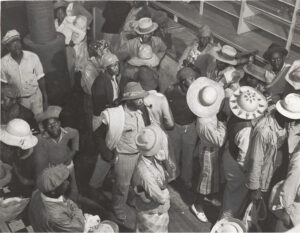
Which brings us to Jesus and this exceedingly irritating parable. A landowner goes out early in the morning and hires workers for his vineyard. He agrees to pay them the usual daily wage. Then he goes out again at nine. And again at noon. And again at three. And then, astonishingly, at five o’clock, when there is hardly any workday left, he goes out once more. He finds people still waiting. “Why are you standing here all day?” “Because no one has hired us.” That matters. The story does not tell us that they are lazy. It does not say they slept late or refused earlier work. They are there because no one has hired them. And the landowner says, “You also go into the vineyard.”
Then evening comes. The workers line up for their wages, beginning with those who arrived last. And the people who worked only one hour receive a full day’s wage. Now imagine being one of the people who has been there since sunrise. You see that coin placed into the hand of someone who worked one hour, and immediately you begin doing the math. If they got that much, imagine what I am going to get. But then your turn comes. One day’s wage. Exactly what you were promised. And suddenly what had seemed perfectly fair that morning feels deeply unfair.
“You have made them equal to us,” the workers complain. There it is. Not: “You failed to pay us.” Not: “You broke your promise.” “You have made them equal to us.” And perhaps that is where this parable begins to get uncomfortably close. Because one of the questions underneath so much of our human understanding of fairness is not simply, “Do I have enough?” It is, “Do I have more than they do?” “Have I received what I deserve compared with them?”
So when I sat with this Gospel this week, rather than beginning with the question, “What is Jesus telling us to do?” I found myself asking another question: What does this passage promise? What does it tell us is true about God and about God’s dream for the world? And I think one of its promises is this: God’s dream is a world in which everyone has enough. Everyone goes home with bread. The person chosen at sunrise has enough. The person chosen at nine has enough. The person chosen at noon has enough. And the person who has spent nearly the entire day wondering whether anyone will choose them, whether they will have anything to bring home, whether there will be food on the table that night—that person has enough too. That is a very different measure from the one most of us have been taught to use.
We live in a world that is extraordinarily good at keeping score. Who worked harder? Who earned more? Who was more productive? Who deserves what? Who got ahead? Who fell behind? And none of those questions is always wrong. Justice matters. Fair wages matter. Work matters. Keeping promises matters. But Jesus seems to be inviting us to imagine that God asks another question before all of those: Does everyone have enough? Enough food. Enough shelter. Enough dignity. Enough safety. Enough belonging. Enough love. Enough of what is necessary for a human being not merely to survive, but to flourish. That may be part of God’s dream for the world. And if so, this parable asks us to notice how easily we can become offended by another person receiving what they need. The workers who began at dawn have not lost anything because the latecomers have enough to eat. Their families are not hungrier because another family is fed. Their dignity is not diminished because another person has also been treated with dignity. And yet generosity feels like injustice when we are keeping score.
It reminds me of that soccer game. My child and her teammates were not inventing the bad calls. Some calls really were bad. But they were seeing the game entirely from one place on the field. And perhaps Jesus is asking us to move. To walk around to the other side. To stand for a moment beside the person who is still in the marketplace at five o’clock. Imagine watching group after group being chosen while you remain behind. Imagine wondering what is wrong with you. Imagine knowing that people you love are depending upon you. Imagine watching the sun move across the sky while your chances of bringing home enough diminish hour by hour. And then imagine someone saying at five o’clock: There is still a place for you. Come into the vineyard. And then, at the end of the day, imagine opening your hand and discovering that you have enough. From that end of the line, this parable sounds very different.
Maybe that is the promise. God does not look at human beings and ask only what they have earned. God sees what people need. God keeps going back to the marketplace. Nine o’clock. Noon. Three. Five. Again and again God goes looking for the people who have not yet been brought in. And perhaps God’s dream is not complete until everyone has been found, everyone belongs, and everyone has enough.
So then comes our third question. If this is the world God dreams of, how are those of us who follow Jesus supposed to live? Perhaps we begin by loosening our grip on the scoreboard. By noticing when our first response to someone else receiving something good is, “But what about me?” By resisting the temptation to measure another person’s worthiness before responding to their need. By asking, in our homes, our churches, our communities, and our common life, not simply, “Has everyone gotten exactly what they earned?” but also, “Does everyone have what they need to live?” And perhaps discipleship means learning to rejoice when someone else receives enough.
That may be harder than it sounds. To celebrate when someone we think arrived late is welcomed. To rejoice when someone who has struggled is given another chance. To be glad when resources flow toward people who need them most. To discover that another person’s flourishing does not diminish our own.
Jesus begins this story by saying, “The kingdom of heaven is like…” And then he gives us this strange vineyard, where the accounting does not work quite the way we expect. A place where those who are last are seen. Where those whom no one has hired are invited in. Where people are not abandoned because the day is nearly over. Where everybody goes home with enough. Maybe this parable is not telling us that fairness does not matter. Maybe it is asking us to imagine a fairness larger than the one we usually practice. A justice that does not stop with, “Did I get mine?” A justice that keeps asking, until every person is accounted for: Does my neighbor have enough?
And perhaps this is the invitation for us: To become people less interested in guarding our place in line and more interested in making sure no one goes home empty-handed. Because that is the world Jesus asks us to imagine. And it is the world God is still inviting us to help build. Amen.