There are some questions that are not really questions. They are traps. We know them when we hear them. Someone asks a question not because they are curious, not because they want to understand, but because they have already decided that whatever answer you give will be used against you. That is what happens to Jesus today.
The Pharisees and the Herodians come to him with a question about taxes: “Is it lawful to pay taxes to the emperor, or not?” It sounds straightforward. It isn’t. The Pharisees and the Herodians ordinarily had very little in common. The Herodians were connected to the political establishment and accommodated themselves to Roman power. The Pharisees were deeply suspicious of Rome and its influence. But apparently, opposition to Jesus could accomplish what almost nothing else could. It brought political enemies together.
And together they devise a nearly perfect trap. If Jesus says, “Yes, pay the tax,” he risks alienating ordinary people who resent Roman occupation. This was not simply an irritating tax imposed by a government they disliked. It was tribute paid by an occupied people to the empire occupying them. They were being required, in effect, to help finance their own subjugation. But if Jesus says, “No, don’t pay,” the Herodians can report him to Rome as a revolutionary.
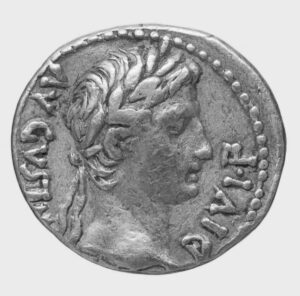
Choose your poison, Jesus. Collaboration or sedition. Yes or no. Which side are you on? But Jesus refuses the terms of the question. “Show me the coin used for the tax,” he says. And someone produces a denarius. Jesus apparently does not have one. His questioners do. And the coin itself tells a story. On it is the image of the emperor, along with an inscription proclaiming imperial power and even divine pretension. Jesus holds up the coin. “Whose head is this, and whose title?” “The emperor’s,” they answer. And then Jesus says those famous words: “Give therefore to the emperor the things that are the emperor’s, and to God the things that are God’s.”
For centuries Christians have sometimes treated this as though Jesus were establishing a tidy division of labor. There are Caesar things over here: taxes, politics, government, elections. And there are God things over there: prayer, worship, faith, church. Just keep the two separate and everybody will be fine. Except that interpretation makes very little sense in the Gospel of Matthew. Because earlier Jesus has already said, “No one can serve two masters.” Jesus does not imagine that we can divide our ultimate loyalty into convenient compartments. He is doing something much more provocative.
Look at the coin, Jesus says. Whose image is on it? Caesar’s. Fine. Give Caesar his coin. But then comes the unspoken question: Whose image is on you? And every Jewish listener standing there knows the answer. From the first chapter of Genesis: “God created humankind in God’s image.” Caesar stamps his image on coins. God has stamped God’s image upon you. And upon me. And upon every human being. So, give Caesar his little coin if you must. But do not give Caesar what belongs to God. Do not give Caesar your conscience. Do not give Caesar your soul. Do not give Caesar your ultimate loyalty. Because you belong to God.
And that changes the question. The question is no longer simply, “Should I pay my taxes?” The question becomes: To whom do I belong? Whose kingdom shapes my imagination? Whose values determine how I live? Whose vision of the world am I helping to create?
Those questions feel particularly urgent right now. We are living through a season of profound anxiety about our country. Many of us are worried about the weakening of democratic institutions. We are worried about the rise of authoritarianism. We are worried about immigrants and refugees, LGBTQ people, women, people of color, people with disabilities, people experiencing homelessness and poverty, and others whose lives can so easily become bargaining chips in political struggles. And as November approaches, many of us are wondering what kind of country we are becoming.
Those concerns matter. Our faith does not ask us to withdraw from political life. Quite the opposite. But this Gospel asks us something deeper than, “Which political side are you on?” It asks: Where does your deepest allegiance lie? Because Christians can make an idol of a nation. Christians can make an idol of a party. Christians can make an idol of a politician. Christians can wrap the cross in a flag so tightly that eventually we can no longer tell which one we are worshiping.
And that is why Christian nationalism is not simply one political opinion among others. Christian nationalism confuses two things Jesus insists that we keep very carefully distinguished. It takes the things of Caesar and gives them the authority of God. It imagines that one nation can be uniquely identified with God’s purposes, that political power can become sacred power, that loyalty to country and loyalty to Christ can become essentially the same thing. Jesus will have none of it. “Whose image is this?” Caesar has his image. God has God’s. And the two are not the same.
But there is another danger here. We can reject Christian nationalism and still turn our own political commitments into another kind of religion. We can imagine that because our politics are more compassionate, more inclusive, more just, we are somehow immune from idolatry. We are not. No political party is the kingdom of God. No candidate is the Messiah. No election will usher in the reign of God. And no electoral defeat can finally destroy it. Our political commitments must always remain subject to judgment by the Gospel.
So how do we know what allegiance to God looks like? Matthew has already told us. Blessed are the poor in spirit. Blessed are those who mourn. Blessed are the meek. Blessed are those who hunger and thirst for righteousness. Blessed are the merciful. Blessed are the peacemakers. Those are not simply lovely sentiments. They are the politics of the kingdom of God.
And later, in Matthew 25, Jesus will make the matter even more concrete: I was hungry and you gave me food. I was thirsty and you gave me something to drink. I was a stranger and you welcomed me. I was naked and you clothed me. I was sick and you cared for me. I was in prison and you visited me. This is how Matthew teaches us to recognize the reign of God.
So, when we ask whether a policy, a movement, a party, a candidate, or a government deserves our support, Christians have questions we must ask. What happens to the poor? What happens to the stranger? What happens to those who have been pushed to the margins? Are people being treated as beloved children of God or as problems to be removed? Are we becoming more merciful? More just? More truthful? More capable of recognizing the image of God in people who are different from us?
Those questions do not tell us exactly how to vote. Jesus rarely gives us answers that easily. Instead, he gives us a vision by which our choices must be judged. And sometimes allegiance to that vision will require cooperation with government. Sometimes it will require protest. Sometimes it will require compromise. Sometimes it will require resistance. Always it requires discernment. Because the question Jesus leaves with us is not simply, “What belongs to Caesar?” The deeper question is: What belongs to God? And the answer is: everything.
“The earth is the Lord’s and all that is in it.” Our money. Our citizenship. Our votes. Our influence. Our bodies. Our time. Our relationships. Our political commitments. Our fears. Our hopes. Our very selves. All of it belongs to God.
Which means that following Jesus is not about withdrawing from this world. It is about entering this world with our allegiance rightly ordered. We vote. We organize. We protest. We advocate. We serve. We call representatives. We protect vulnerable neighbors. We tell the truth. We resist cruelty. We work for justice. And we do all of these things remembering that Caesar does not own us. No president owns us. No party owns us. No nation owns us. God does.
And perhaps that is the freedom Jesus is offering us today. Because if God is finally sovereign, then we need not surrender to either fear or despair. Empires always try to convince us that they are permanent. Rome certainly did. Its coins proclaimed it. Its armies enforced it. Its emperors declared it. And yet Rome did not get the last word.
Just a few days after this conversation, Rome will do what empires do when someone threatens their power. Rome will crucify Jesus, publicly and brutally. The empire will put him on a cross and declare the matter finished. And three days later, God will answer. That is the Christian hope. Not that politics does not matter. It matters enormously, because people matter enormously. But Caesar never gets the last word. Cruelty does not get the last word. Fear does not get the last word. Authoritarianism does not get the last word. Death itself does not get the last word. God does.
So, render unto Caesar what belongs to Caesar. But never forget whose image you bear. And never forget whose image is borne by the immigrant, the transgender teenager, the frightened pregnant woman, the person sleeping beneath a bridge, the refugee at the border, the child whose family cannot make ends meet, the neighbor whose politics make you furious, and even the person you have learned to call your enemy. The image of God. Every one of them. Every one of us.
And if we truly give to God what belongs to God, then perhaps our lives will begin to resemble God’s dream: a world where the poor hear good news, where the stranger is welcomed, where the merciful receive mercy, where peacemakers are called children of God, where those who hunger and thirst for righteousness are filled, and where no Caesar, no empire, no party, and no nation is ever mistaken for God. Amen.