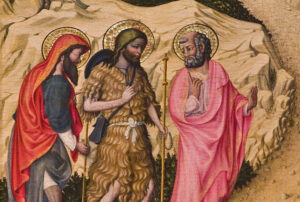
On the road to Emmaus, two disciples are walking away from Jerusalem with broken hearts and broken hopes. They are not serene. They are not triumphant. They are not performing religion. They are trying to make sense of disaster. And they speak the words so many of us know by heart: “We had hoped.”
We had hoped he was the one. We had hoped justice would come. We had hoped truth would matter. We had hoped cruelty would not have the last word. That is where Easter begins in Luke. Not in denial. Not in fantasy. Not in pious escape. Easter begins in grief, confusion, and the struggle to tell the truth. And that matters, because many of us know that place.
We, too, are living in a time of broken hopes. We are living in a time when the name of Jesus is used to bless domination, cruelty, and war. We are living in a time when public Christianity is being made grotesque. We are living in a time when faith is turned into spectacle, threat, branding, and blasphemous theater.
And the church must say, clearly and without apology: Not this Jesus. Not the Jesus of macho threats. Not the Jesus of holy violence. Not the Jesus of nationalist spectacle. Not the Jesus of cultic flattery and domination.
Not this Jesus. Because the risen Christ on the road to Emmaus is not a strongman. He does not arrive with swagger. He does not demand applause. He does not pose as a conqueror. He comes as a companion to the grieving, a stranger on the road, a guest at table, and then, at the table, the host who takes bread, blesses it, breaks it, and gives it.
That is what Jesus looks like. And because that is what Jesus looks like, Christians must learn again how to recognize him. And not only how to recognize him, but how to refuse the false versions of him that power keeps trying to sell us.
The disciples do not recognize Jesus at first. Luke says their eyes were kept from recognizing him. Maybe grief blinds them. Maybe trauma narrows their vision. Maybe sorrow makes it hard to see anything clearly. But maybe it is also this: maybe they were still looking for the wrong kind of messiah. They had hoped for redemption, and they were right to hope for it. They had hoped for justice, liberation, and a world made new. They were not wrong to long for God to act.
But what they could not yet imagine was a Messiah who would not look like Caesar. A Messiah who would not save by domination. A Messiah who would not redeem the world by becoming more violent than the empire. A Messiah who would be crucified by the system and then vindicated by God.
So, when the risen Christ appears, he is not recognizable as empire. He is not recognizable as spectacle. He is not recognizable as coercive power. He is recognizable in a wholly different kind of politics: companionship, scripture, hospitality, table, bread. And that is why the fusion of Christianity and domination is always a lie.
Christ is risen, but Christ is not the chaplain of nationalism. Christ is alive, but Christ is not the mascot of military threat. Christ is Lord, but Christ does not sanctify cruelty.
And the church has to say that out loud. Because when leaders wrap themselves in the language of faith while threatening destruction, that is not Christianity made strong. It is Christianity made blasphemous. When the name of Jesus is turned into decoration for power, that is not witness. It is idolatry. When resurrection language is used to bless war, that is not Easter faith. It is a desecration of Easter faith. And if the church cannot tell the difference, then the church has forgotten its Lord. The road to Emmaus gives us another way.
Notice first that Jesus does not shut down the hard conversation. He joins it. These disciples are talking about crushed hope, failed leadership, religious betrayal, public humiliation, and state violence. They are talking about the collision of religion and politics. They are talking about what happens when power kills truth. And Jesus comes near them there.
He does not say, “Stop talking politics.” He does not say, “Faith has nothing to do with this.” He does not say, “Be quieter, be nicer, be less serious.”
He enters the conversation. That matters for the church. Faith is not pretending. Faith is not numbness. Faith is not spiritualized avoidance. Faith seeks understanding. Faith tells the truth. Faith is willing to speak honestly on dangerous roads.
So, if you are exhausted by the blasphemous uses of Christianity in public life, if you are heartsick watching the name of Jesus attached to threats and mockery and domination, hear this: your grief is not a failure of faith. Your anger is not a failure of faith. Your questions are not a failure of faith. Christ meets disciples there.
He meets them in the honest conversation. He meets them in the ache of disappointment. He meets them in the sentence, “We had hoped.”
And then Jesus does something else. He does not deny the pain. He does not erase the violence. Resurrection does not mean saying, “None of that mattered.” Crucifixion is still crucifixion. Violence is still violence. Bombing is still bombing. Fear is still fear. The death of truth, the death of decency, the death of mercy: these are real deaths.
But Jesus places even that pain inside a larger story. God has not surrendered the world to empire. God has not abandoned the brokenhearted. God is still at work, though not in the form the world calls strength. That is Easter hope. Not the denial of suffering, but the refusal to let empire have the last word.
Then they come to the table. And here Luke becomes especially urgent for the church, because the disciples know Jesus in the breaking of the bread.
Not in spectacle. Not in branding. Not in imperial theater. Not in viral imagery. In bread. In taking. In blessing. In breaking. In giving.
This matters because in Luke’s Gospel, Jesus is most himself at the table. At table, strangers are welcomed. At table, boundaries are crossed. At table, dignity is restored. At table, mercy makes a new community. So, the breaking of bread is not a retreat from politics. It is the church’s alternative politics.
The world says power comes through domination. The table says life comes through gift. The world says secure yourselves against one another. The table says receive one another. The world says some lives are expendable. The table says every body is holy. The world says bless the violence that keeps you on top. The table says blessed are the poor, the mourning, the merciful, and the peacemakers.
This is why Eucharist matters so much in a time like this. The church’s answer to idolatry is not better branding. It is not louder performance. It is not finding our own strongman. It is bread, truth, mercy, and communion.
Week by week, the scriptures are opened. Week by week, the bread is broken. Week by week, our eyes are trained.
Trained to recognize the real Christ. Trained to reject the false one. Trained to know the difference between holiness and theater. Trained to know the difference between mercy and domination. Trained to know the difference between the Lord of life and the idols of death.
And notice this, too: on the road, Jesus is mistaken for a stranger, someone from elsewhere, someone foreign. How revealing that the risen Christ appears under the sign of foreignness. How revealing that salvation comes disguised as the one the world is tempted to exclude.
What if they had refused him? What if they had feared him? What if they had decided he did not belong? But they do not refuse him. They say, “Stay with us.” That may be the prayer the church most needs right now.
Stay with us, Lord, when public religion becomes cruel. Stay with us, Lord, when truth is mocked. Stay with us, Lord, when fear makes us smaller. Stay with us, Lord, when we cannot yet recognize you. Stay with us when power calls evil good. Stay with us when the sacred is dragged into spectacle. Stay with us when the strong are praised and the vulnerable are despised. Stay with us when we are tempted to despair.
And Christ does stay. He stays in the word. He stays in the bread. He stays in the gathered body. He stays in the neighbor. He stays in the stranger. He stays in the hard conversation. He stays in the long road between “We had hoped” and “The Lord is risen indeed.”
So, what do we do in a time like this? We tell the truth about false Christianity. We refuse to remake Jesus in the image of domination. We refuse every blasphemous version of Christ that blesses cruelty, worships power, or baptizes violence. We welcome the stranger. We practice courageous conversation. We break the bread. We become a people who know Christ not by spectacle but by mercy, not by threat but by tenderness, not by domination but by communion.
Not this Jesus. Not the Jesus of threats. Not the Jesus of holy violence. Not the Jesus of blasphemous power.